



Buying or selling a condo in Los Angeles now runs through the rules for loans lenders sell to Fannie Mae and Freddie Mac. They decide whether a buyer can use that loan, and how long the file takes. A strong borrower can still be denied because of the building.
This is drawn from Fannie Mae Lender Letter LL-2026-03 and Freddie Mac Bulletin 2026-C, both March 18, 2026, and Freddie Mac Bulletin 2026-6 on May 6. The wording is not identical.
What actually got tougher
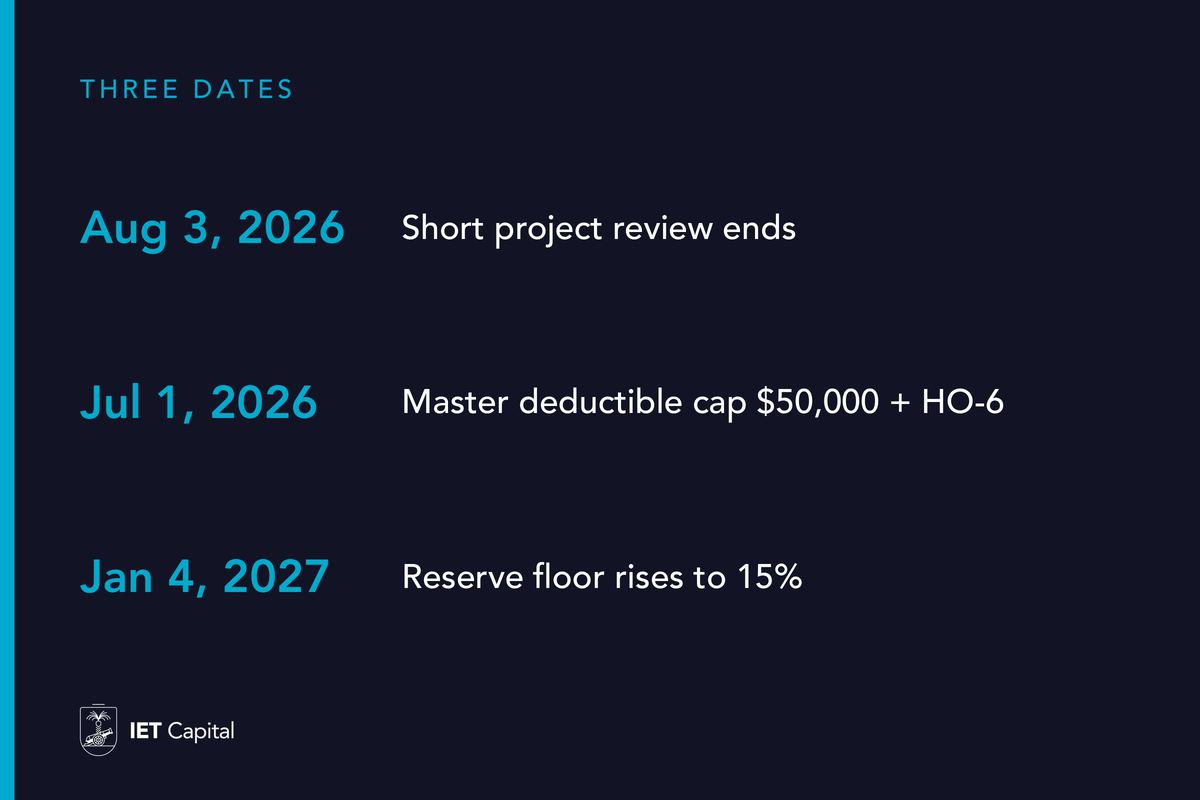
The short project review is over. Fannie Mae retired Limited Review. Freddie Mac retired Streamlined Review. For applications dated (Fannie Mae) or received (Freddie Mac) on or after August 3, 2026, an established project needs Fannie Mae’s Full Review, or Freddie Mac’s established-project review or a reciprocal review, unless a small-project waiver or exemption applies. A prior Freddie Mac review does not excuse a new application.
The bulletins never say how often the short review was used. Outside estimates conflict and are not agency figures. Reporting says a project that passed the short review can fail the fuller one.
Reserves tighten on two dates. From August 3, 2026, a reserve study used to show adequate reserves must be funded at its highest recommended allocation. Baseline funding, which lets the balance approach zero, is no longer allowed. From January 4, 2027, the minimum rises from 10 percent to 15 percent of annual budgeted assessment income when a Fannie Mae loan is in Full Review. Freddie Mac uses the application-received date. Both letters tie thin reserves to unfunded repairs.
Insurance moves some cost to the buyer. From July 1, 2026, a per-unit master deductible may not exceed $50,000. The borrower needs an HO-6 if that deductible exists, or if the master policy does not cover the interior or the improvements. Coverage must be at least the greater of the uncovered restoration cost or that deductible. The HO-6 deductible may not exceed the greater of 5 percent of its coverage or $2,500. Roofs must still be insured, but not at replacement cost, and inflation-guard coverage is retired. Master coverage must be at least 100 percent of estimated replacement cost.
One test eased. On established projects, both dropped the 50 percent investor or owner-occupancy limit for investment-property loans. Fannie Mae still requires new projects to have at least 50 percent of units conveyed or under contract to principal-residence or second-home buyers. Freddie Mac says its presale rules for new projects still apply.
Why this can pressure a seller’s price
The letters publish no discount. What changes is who can use an agency loan, and how long approval takes.
If the project fails, that loan is unavailable. Buyers left are mostly cash, or using a lender that keeps the loan. Reporting describes more denials, slower files, and a thinner pool on a later resale, not a measured discount. Missing documents and dead escrows cost time. Trade groups have asked to delay the January 4, 2027 reserve step. The letters have not moved it.
Why the purchase is harder for a strong buyer
The lender reviews the borrower and the project. After August 3, a credit score does not bring back the short review. The file can stall or be denied on the budget, the insurance, or the building’s condition after you are under contract.
Small projects are the split the letters actually wrote. Fannie Mae’s waiver covers new and established projects of ten or fewer units. For five to ten units, a master association or larger development blocks the waiver. Freddie Mac’s exemption covers new and established projects of 2 to 10 units, with the same master-association limit for 5 to 10 units. They differ on critical repairs for those small projects, so confirm which agency the lender will use before you count on the shortcut.
A larger project, or a small one inside a master, stays on the fuller review, including the 15 percent reserve test on or after January 4, 2027.

What this means in Los Angeles
Standalone small associations may get the waiver or exemption. Towers and multi-building communities on the Westside and in the South Bay usually will not. A per-unit deductible up to $50,000 is still the buyer’s HO-6. California condo law is not the same test as a Fannie Mae or Freddie Mac review.
What to ask before you write an offer
- How many units, and is there a master association or a larger development?
- Is the path a full or established-project review, a reciprocal review, or a small-project waiver or exemption, and for which agency?
- What share of annual budgeted assessment income goes to reserves? If a reserve study is used, is the budget at the highest recommended amount, not a baseline plan?
- Is master coverage at least 100 percent of estimated replacement cost, are roofs insured, and what is the per-unit deductible?
- If an HO-6 is required, can it cover the greater of the uncovered interior and that deductible, with its own deductible at or under the greater of 5 percent or $2,500?
- Any critical repairs, evacuation order, special assessment, or litigation?
- For a Fannie Mae waiver, has the lender confirmed the project is not marked Unavailable in Condo Project Manager?
If the project is unlikely to pass, say so before you accept an offer. Cash buyers and lenders that keep the loan are what remain. That changes who can perform. It is not a percent off the last sale.
Rules change, and a lender’s overlays can be tighter than these guides. This is general information from IET Capital, not a rate quote, a commitment to lend, or a finding that any project is eligible. Confirm the current rules with your lender and the project documents before you write or accept an offer.